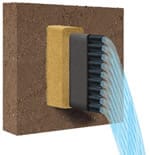
The explosion of Multi-Flow usage is part of a larger trend toward more extensive and intensive drainage in sports turf areas. Facility managers are under persistent pressure to keep fields healthy, attractive and ready for use. Heavy schedules make this a major challenge because using fields during saturated conditions compacts the soil, consequently threatening the turf.
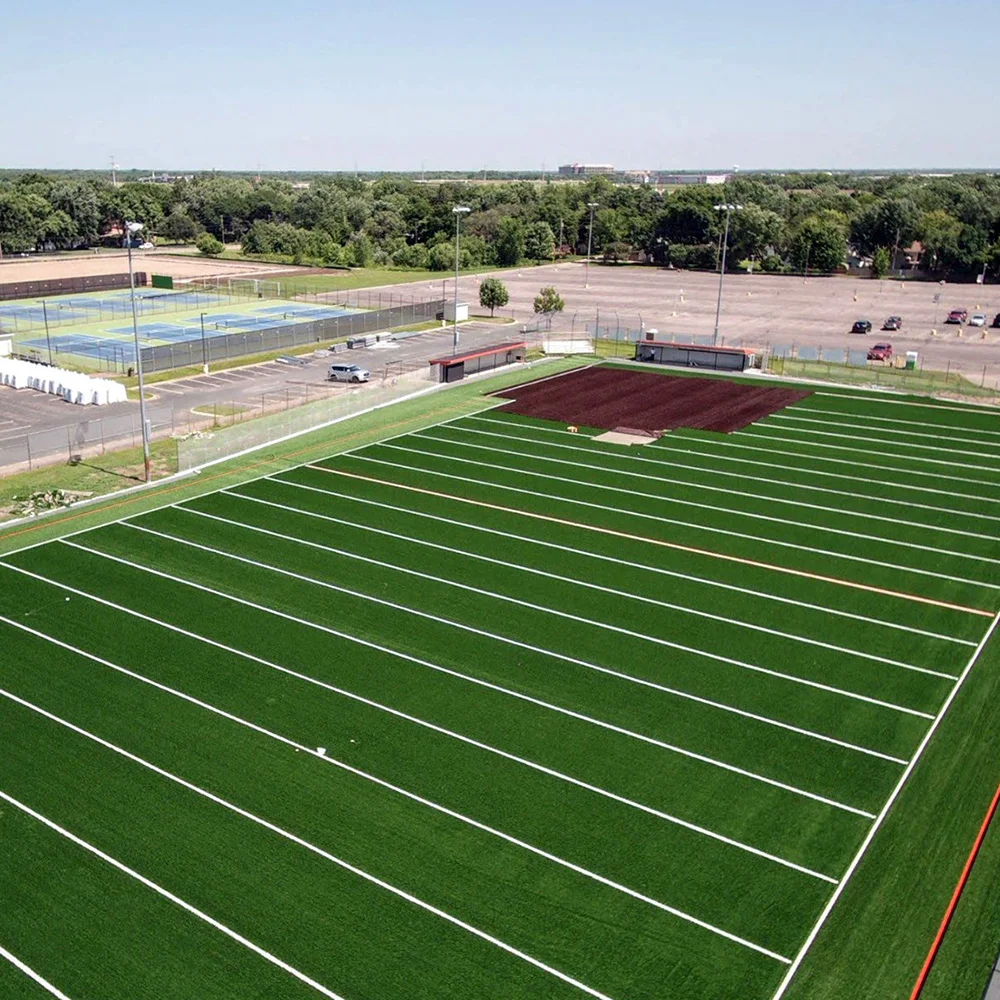
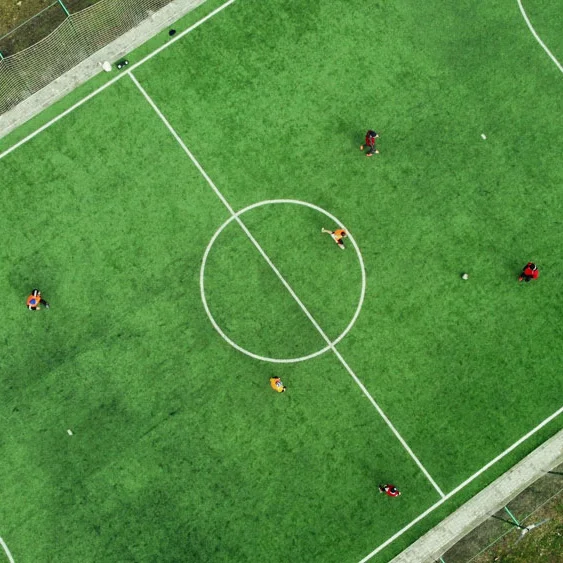
Multi-Flow systems can be found not only in common sites such as football, baseball and soccer fields but also in less familiar settings such as polo fields, croquet courts, clay or grass tennis courts, lawn bowling greens, bocce courts, horseshoe courts, equestrian centers, sand volleyball courts, and open play areas.
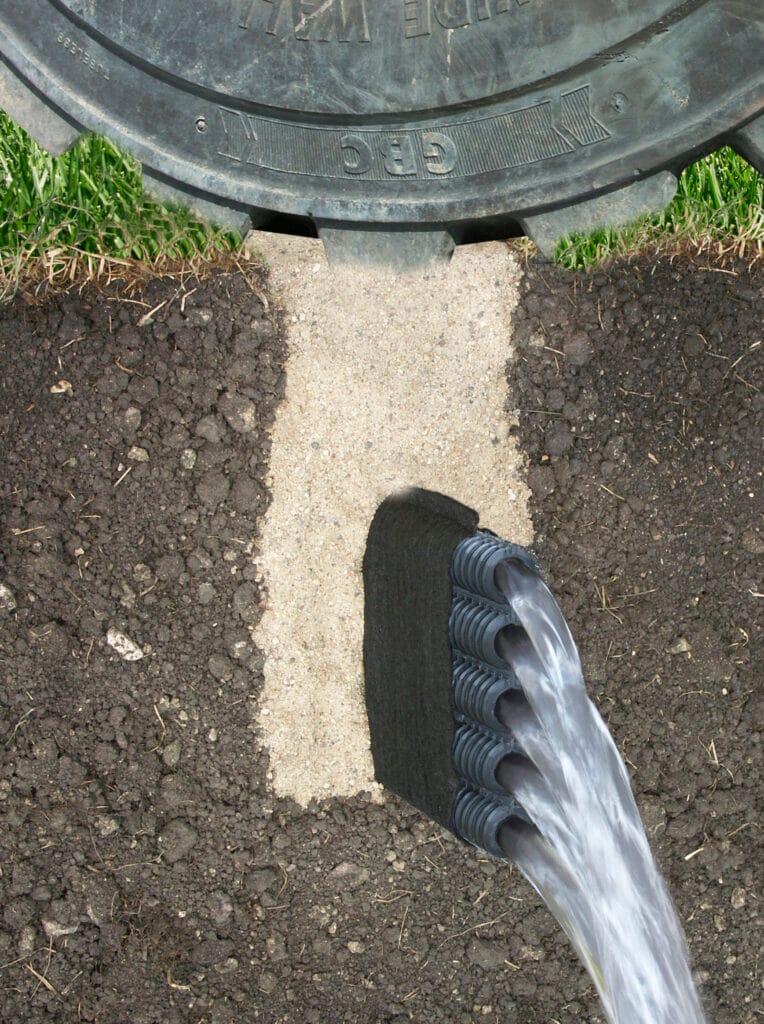
Most commonly, Multi-Flow is installed vertically in natural turf settings and horizontally under synthetic turf. There are some exceptions to this practice but generally this takes best advantage of Multi-Flow’s shape.
When trenching is required, vertical installations take best advantage of Multi-Flow’s narrow profile.
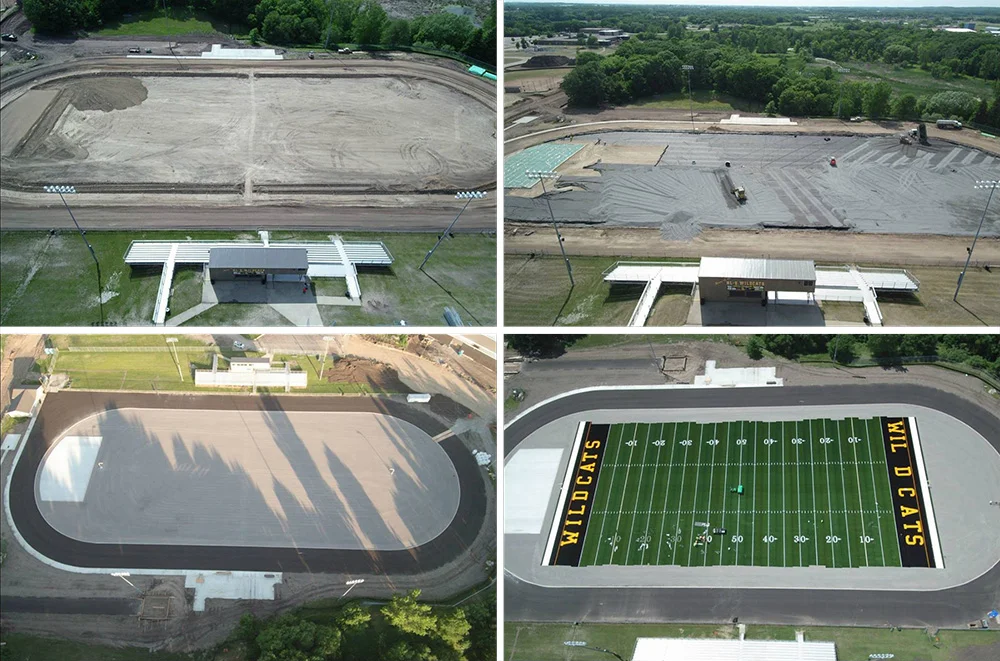
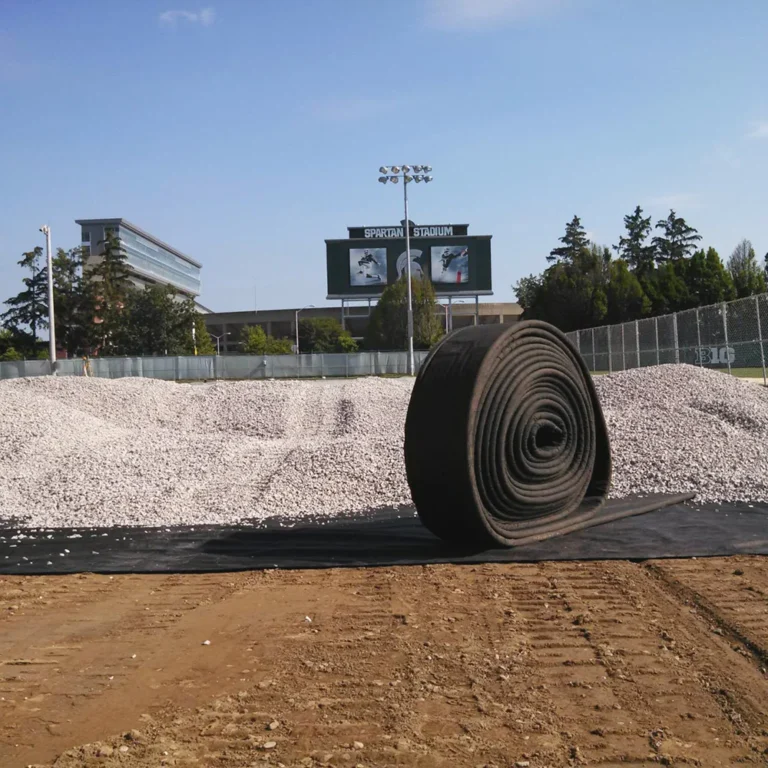
However, in synthetic turf settings, a nearly impermeable clay base is established and select, porous fill is placed over it. Laying Multi-Flow directly on the dense clay base locates it where the water accumulates. This eliminates the need for trenching.
Most natural turf playing surfaces can benefit from a quality drainage system. Increased time in play and extended life of the playing surface, are the direct outcome of quality drainage. Installing Multi-Flow provides an effective, durable, affordable, and an easy to install drainage system.
A completed Multi-Flow system typically costs about half as much as a comparable French drain system. Add to that its longer life and Multi-Flow begins to look very attractive!
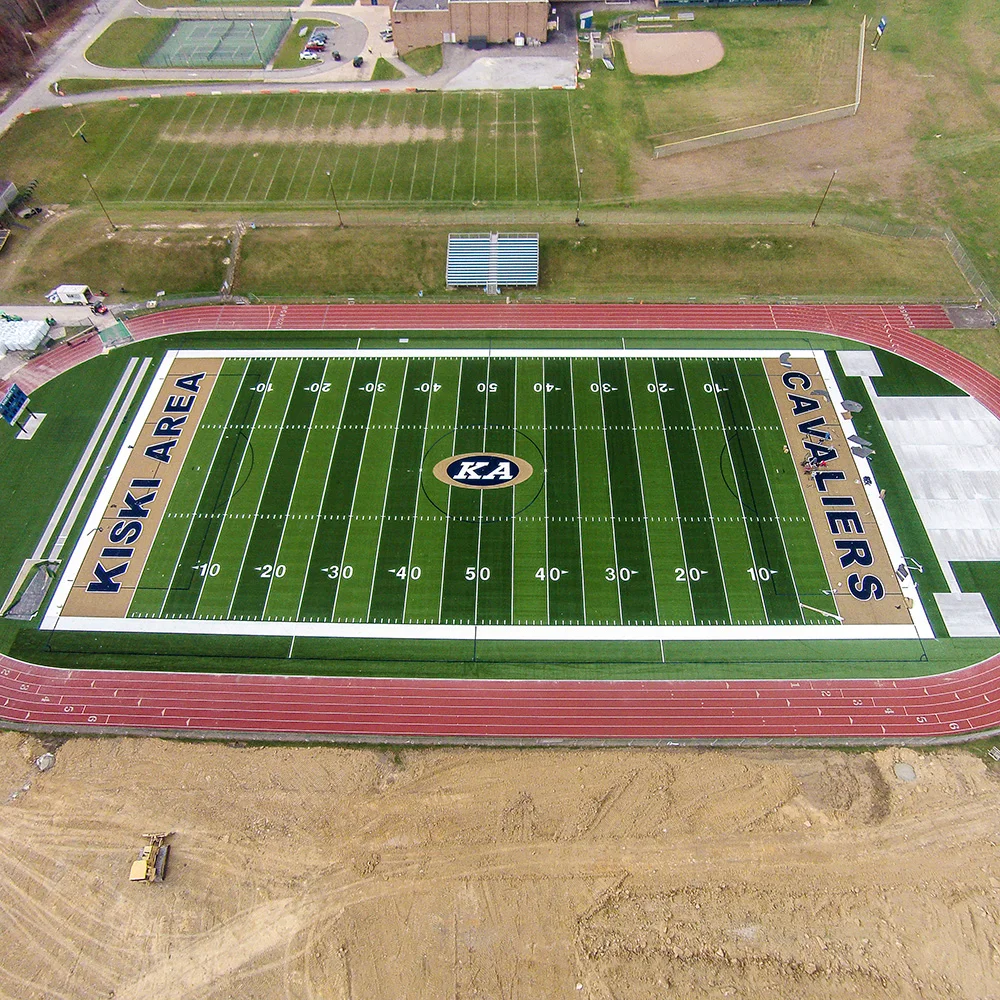
A synthetic football field might cost over $8.00 per square foot to construct. Implementing the drainage system typically costs another $0.10 per square foot. Overlooking the drainage, or using inferior drainage products might put the entire field a risk and save only pennies per square foot.
As the synthetic turf market becomes more and more competitive, designers are constantly looking for ways to reduce the cost of construction. Sometimes the drainage system falls victim to this pressure. Synthetic turf is typically installed over a layer of coarse porous material which is located on a packed clay base. This material is capable of holding large amounts of water and this water eventually finds its way out to the edge of the field and into a well drained perimeter trench. Because of the holding capacity of the stone aggregate, seldom does a field receive so much rain that water pools on the surface.
This does not mean that the drainage is adequate. As water perches on the clay base for extended periods of time it begins to infiltrate and destabilize the clay. Saturated clay loses 60% of its load bearing strength. The result is a shifting in the shape of the base which produces settling and rippling of the surface.
A synthetic football field might cost over $8.00 per square foot to construct. Implementing the drainage system typically costs another $0.10 per square foot. Overlooking the drainage, or using inferior drainage products might put the entire field a risk and save only pennies per square foot.
Multi-Flow and Multi-Flow LDVS are property of Varicore Technologies, Inc.
The information contained on this site, including technical drawings, illustrations, pictures, diagrams, etc., are for recommendation only.
It is sole responsibility of determine correct suitability and usage of materials on project.