
Frequently Asked Questions
Questions we are asked about appropriate use.
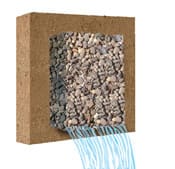
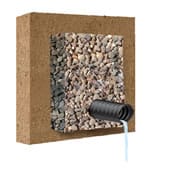
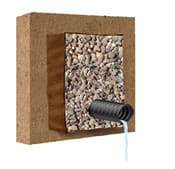
Multi-Flow is a modified and improved French Drain. Multi-Flow has several important advantages over an old-fashioned French Drain:
Extended Life of the Drainage System: Coarse sand will dramatically extend the life of any filter wrapped drainage system. However, it is very difficult to replicate the sand filter when constructing an old-fashioned French Drain. Because of this, French Drains routinely decrease in efficiency until they blind altogether, often within a few years. It is easy to surround Multi-Flow with very coarse sand backfill.
Less Surface Disruption: In renovation settings, there is a huge advantage in using the small equipment required in installing the Multi-Flow System rather than the large equipment used to construct a conventional French Drain.
Cost: The Multi-Flow System requires only a four-inch trench. This saves on the cost of excavation and backfill bringing the overall cost down well below that of other French Drains.
- Artificial Drainage
- Artificial drainage is the removal and relocation of excess soil water. Once soil is holding its maximum amount of water, additional water from rain or irrigation will pond on the surface or flow to a lower point. A drainage system provides a passageway for excess water to escape through as it leaves the saturated area..
- Consider the Open Trench
- For the most basic model of a drainage system, picture for a moment a field that is crisscrossed by narrow trenches. Water from neighboring saturated soils or from puddles on the surface will seep into these trenches and flow from the area. Drainage products hold the walls of the trench open while allowing the surface to be covered.
- Gravity Rules
- Like natural drainage systems, artificial drainage systems rely on gravity. They cannot draw water “uphill.” Therefore, drainage systems are dependent on a continuous natural or a created slope. Water flows to a lower point whenever a lower point is available.
- Collection and Transport
- Modern artificial drainage systems are comprised of:
- collector lines to gather the water
- a transport system to carry the water away
- Modern artificial drainage systems are comprised of:
- When planning the layout of Multi-Flow collector lines, consider these factors:
- Multi-Flow is the preferred collector system while smooth, rigid pipe provides the most reliable transport system.
- Drainage lines that are spaced more closely together provide a more thorough and rapid response. In many situations 10 foot spacings are ideal.
- Drainage lines that are placed closer to the surface will generally respond more quickly. Drainage lines that are placed deeper will generally drain a wider area but will take a longer time to do so.
- Soil particle size will dramatically affect the speed at which water moves through the soil. Coarse, loosely-packed soils allow for fast water movement. Fine, compacted soils yield water at a slower rate. Placing collectors closer together and closer to the surface is helpful in porous soils because water in these soil types reaches the collectors quickly and extra carrying capacity is required. It is helpful in dense soils because closer spacings mean that water need not travel so far to get to the collectors.
- Soil is often not uniform. Layers of clay or hard pan will affect the flow of water significantly.
- Collector line length is often limited by the carrying capacity of the product. For example, if you wish to be able to stay ahead of one inch of rainfall per hour, and you have installed 6-inch Multi-Flow (capable of carrying 1020 gallons per hour) on 12 foot centers, the line should not exceed 136 feet in length. (One square foot of water one inch deep is .623 gallons. 136 X 12 X .623 = 1017 gal.)
- Multi-Flow is the preferred collector system while smooth, rigid pipe provides the most reliable transport system.
Frequently we are asked what advantages Multi-Flow has over other panel-shaped drains. We will share some of the more obvious differences. We encourage you to compare for yourself by checking out the information provided by other manufacturers on their websites.
We would like to point out four Multi-Flow advantages.
- Superior Flow Rates –Multi-Flow products are capable of carrying water away at about twice the rate of would- be rivals. Flow rates for Multi-Flow’s six-inch products are generally comparable or superior to the 12-inch products of other panel drains.
- Functional Connectors – The Multi-Flow system provides simple effective ways to connect Multi-Flow components to other Multi-Flow components as well as connections to corrugated or rigid pipe. Other panel shaped systems provide a very limited selection of connectors and many of these appear to be second-rate at best. These manufacturers are reluctant to show their fittings on-line.
- Integral Flow Channels – Most panel drains consist of posts or cuspate wrapped in filter. They may have the appearance of egg cartons wrapped in cloth. Water is supposed to flow between the posts or cusps. These flow areas are dramatically reduced in size when, due to intrusion and compaction, the filter is forced into interspatial areas. But, Multi-Flow has enclosed flow channels which are not susceptible to the same problem.
- Uniform Strength – Pillar type panel drains measure their strength applying perpendicular pressures. Under such conditions, they yield results similar to Multi-Flow. They do not respond nearly so well when diagonal pressures are applied. In real world situations, however, pressure is seldom from an exclusively perpendicular direction. Multi-Flow exhibits strength, regardless of the direction of the pressure.
Installation Background: Typical synthetic turf installations position the turf over a layer of stone aggregate. (Frequently, it’s two to three layers of stone aggregate, increasing in size from top to bottom.) This in turn rests on a dense clay base separated by a geotextile liner. Water landing on the turf soon seeps through to the clay. From there, it slowly moves toward a collector trench where an under drain collects it and carries it away. The stone aggregate is capable of holding large amounts of water. Seldom does a field receive so much rainfall that it exceeds the holding capacity of the stone, and water begins ponding on the surface.
Caution: However, if the water is allowed to remain on the clay base for extended periods of time, the base begins to disintegrate. A saturated clay base will retain less than half of its original load bearing strength. While the foundation loses its structural integrity, the surface sags, bows, and ripples. A drainage system located on the geotextile liner provides the water a rapid avenue of escape. Thereby, the drainage is protecting the vital base from saturation. The durability of a synthetic turf field depends on an excellent under drain.
A Multi-Flow Pipe Drainage System provides this excellent under turf drainage. Because of its shape, it need not be trenched. It is also strong enough to avoid collapsing. It also provides excellent flow rates.
Multi-Flow will deflect only 20% when a force of 6,000 pounds per square foot is applied, but there will be no change in its water flow properties. In other words, you can apply 6,000 lbs/sq/ft of force and still expect a full flow from the system. Multi-Flow has been tested to 10,000 lbs/sq/ft where it demonstrated ovaling, but no significant reduction in rate of flow.
Walking on, maintaining, or driving over soil that is saturated will compact the soil by forcing suspended soil particles into air voids. This will make the surface hard and uneven as well as inhibiting healthy plant growth. Soil that is saturated or lacking in voids will not yield healthy grass.
Questions we are asked about installation.
A minimum 4 inch wide trench is recommended. This allows for approximately 1.5 inches of sand filter on either side of the drainage product.
 , Multi-Flow comes ready to drop into an open trench. Do not use any additional fabric to line the trench. This would expose the Multi-Flow System to the same risks French Drains face.
Transport systems need to be able to carry water away from the site as fast as the collector system can accumulate it. Furthermore, the transport system must be at least as strong as the collector system. PVC, ABS, and dual wall corrugated HDPE pipe are good options.
Flow rate requirements will vary depending on the number of collector lines that are being fed into a given transport pipe. Six inch, 12-inch, and 18-inch Multi-Flow collectors are capable of delivering 17, 29, or 45 gallons per minute, respectively. Multiply the number of collector lines times the appropriate GPM to determine the maximum expected rate
Customers attach Multi-Flow to a wide variety of round pipes, including corrugated single wall, corrugated double wall, PVC, ABS, Schedule 10, Schedule 40, Schedule 80, straight pipe, pipe with bell, and flanges, etc. Obviously Multi-Flow will attach differently to each.
There are a number of options for connecting Multi-Flow to round pipe.
- Side outlets are used when tapping into the side of a longer run of Multi-Flow and discharging at 90 degrees to the Multi-Flow
- End outlets are placed at the end of the drainage system and discharge the collected water into a round pipe in a straight line.
Multi-purpose connectors (Especially 0600M, 1200M, and 1800M) are used …. low the collector level.
With “Multi-purpose connectors (Especially 0600M, 1200M, and 1800M) are used when high volumes of water are anticipated or there is room for an elbow or tee below the collector level.
Side outlets and end outlets are available for all three Multi-Flow drain system formats”
With “Side outlets and end outlets are available for Multi-Flow drain system. 18” Multi-Flow uses a 1800M as an end outlet for improved outflow rates.
- The 12 and 18-inch connectors have a 4.95 inch inside diameter bell.
- The six-inch connectors have a 3.95- inch inside diameter bell.
After the facing membrane has been cut away, the outlet can be inserted into a pipe; or a round pipe can be inserted into the outlet. The fit will depend on what type of round pipe is being used.
Six-inch connectors will fit snugly over a three inch Schedule 40 PVC or loosely into a Schedule 40 bell. Twelve and 18-inch connectors will fit over the bell of a four-inch Schedule 40 PVC” Make it a part of the previous paragraph and add a period.
- If the pipe is smaller than the outlet, it is advisable to cut the opening in the membrane to accommodate the pipe size and style that will be used. Caution: Always cut the opening at the bottom of the membrane. Make this a stand alone paragraph with no bullet.
For certain diameter round pipes, it is convenient to insert the outlet bell into the round pipe. The stub of the outlet can be scored or slotted to accommodate this insertion.
In all cases, two-inch PVC tape should be used to prevent sand infiltration during the backfilling of the trench. Use of the end outlet and side outlet does not result in an exact fit.
In many cases the best option is to discharge from the bottom of a multi-purpose connector. All of the Multi-Flow Multi-Purpose connectors, such as tees, wyes, crosses, can be used as bottom outlets. Three-inch PVC elbows and tees can be used for these connections. They make for an exact and waterproof fit. Pipe cement will make the connection permanent.
There are a variety of ways that a rigid transport pipe can be tapped. Common methods are the use of in-line tees and saddle tees.
Multi-Flow manufactures the Rigi-Tap connector made especially for this purpose. The Rigi-Tap allows for a convenient transition from a Multi-Flow Multi-Purpose Connectors (such as a 0600M) to a PVC pipe. This is a cost effective and time saving method for converting from a Multi-Flow collection system to any rigid pipe transport system. It is an attractive alternative to expensive and time consuming in-line tees.
The 08RTP provides connection to an 8-inch PVC while the 10RTP connects to a 10-inch PVC. Connections to other diameters are available by special order.
Instructions for installation:
- Select and mark the center of the correct spot on the PVC transport pipe to install the Rigi-Tap.
- Cut a clean hole in the PVC pipe using a 3 ½ inch hole saw.
- Clean all surfaces and apply PVC cement to the PVC pipe around the hole and on the exposed pipe wall and to the the Rigi-Tap spud and saddle tee wall.
- Insert the Rigi-Tap into the hole 90 degrees off from the final nested position. Rotate the Rigi-Tap until it is firmly seated.
- Following the guidelines of the manufacturer, allow ample time for the weld to harden before attaching the multi-purpose connector.
As with rigid pipe, there are a variety of ways that a corrugated transport pipe can be tapped. The use of in-line tees are common methods. Varicore manufactures the Corru-Tap connector made especially for this purpose.
If corrugated pipe is selected for a transport system, Varicore encourages the use of dual wall pipe. Single-wall corrugated pipe does not possess the crush resistance of the Multi-Flow collectors. It would be unwise to engineer for strength in the collection system and settle for weakness in the transport system. Dual wall corrugated pipe is a better choice.
Having said that, we know that there are times when a single-wall corrugated transport system is already in place. With that in mind, the Multi-Flow Corru-Tap provides a cost effective and time saving method for converting from a Multi-Flow collection system to any corrugated transport system 8-inch diameter and larger.
When Multi-Flow is installed horizontally, such as under synthetic turf, a 06023 or 12023 is used. This is far superior, on the one hand, to the common practice of simply emptying the collector lines into a rock filled trench allowing it to find its own way into the perforated transport. It is far easier than installing a tee in the transport line.
The 00CTV will connect to any Multi-Flow multi-purpose connector and is usually used in vertical situations. This vertical Corru-Tap connects to any Multi-Flow multi-purpose connector. An extension can be used if the transport is located at a much lower elevation.
Corru-Taps provide a soil tight, but not water tight, fit. Since it is entering a perforated pipe, a water tight fit is unnecessary. The Corru-Tap is typically suitable for 8 to 18-inch dual wall pipe.
Instructions for installation
- Select and mark the center of the correct spot on the top of the transport pipe to install the Corru-Tap.
- For a soil tight fit, cut a clean hole in the pipe using a hole saw. Use a 3 7/8 -inch hole saw for 06023 and 00CTV Taps or a 4 7/8 – n inch hole saw for a 12023.
- Insert the Corru-Tap into the hole until the locking tabs engage.
- In horizontal applications, Multi-Flow pipe is connected directly into the Corru-Tap. In vertical applications, the Corru-Tap will receive any multi-purpose connector or a pipe extension.
A PVC riser pipe can be connected to the bottom of any multi-purpose connector. The length of this riser is indeterminate. In situations where settling is anticipated, a flexible rubber boot is recommended. The rubber boot will provide flexibility in the event of shifting above or below.
Inspection ports can be installed above any multi-purpose connector. A 3” Female Adapter with Plug, Part #ABS01, connects to the multi-purpose connector using a piece of 3-inch PVC the length required to reach the surface. Inspection ports could be used to flush a system, to monitor water flow, to mark line locations, or more commonly, to satisfy curiosity.
Assuming it is not possible to cut through the obstacle, Multi-Flow can be connected to an end outlet, connected to a short piece of round pipe that runs under the object, and then connected back to another end outlet which is attached to the continuing line of Multi-Flow.
See: (Engineering/Application Download/Land Use Types (Activity or Purpose-Based)/ Under Obstacle)
Artificial drainage makes use of gravity to relocate unwanted water. Gravity pulls the water down the grade, the length of the trench (drainage system) to the outlet. If the trench does not slope downward to one end, then water will only move after it builds up in the trench, and it will move much more slowly than it would if there were slope to the trench. It is advisable to maintain .5% to 1% minimum slope in the drainage system. (.005 – .001 gradient or 6 to 12 inches of fall for each 100 feet of length)
Multi-purpose outlets and connectors (e.g. 1200M and 12009 can be coupled together using a 3” to 3” couple (ABS05) In larger volumes, Varicore can custom manufacture connectors to accommodate multiple lifts. Multiple lifts are sometimes needed in highway drainage along steep slopes, behind retaining walls, and in other specialty settings.
Selection of a suitable backfill medium is critical for the proper performance and longevity of any drainage system. The backfill medium serves as a primary filter to screen out silt and clay that might eventually clog the drainage system.
Fine and very fine sand may slow down the inflow of water and may even pass through the filter. Larger aggregates, on the other hand, will not do an adequate job of filtering.
“Very coarse sand” is recommended as backfill medium for drainage products. According to the USDA system of classification, very coarse sand has an approximate particle size of between 1.0 and 2.0 mm.
When passed over sieves very coarse sand will have:
- less than 5% retained on a #10 U S standard sieve
- less than 5% passing a # 30 U S standard sieve
- No more than 1 % pass through a # 50 U S standard sieve
Should it be necessary to deviate from this recommended backfill material due to lack of availability or other constraints placed upon the drainage system design, a reduction in the life of the drainage system can be anticipated.
A more complete discussion about selecting backfill can be found in the engineering section.
Obviously we would not want to see installers backfill Multi-Flow, or any other drainage product for that matter, with native soil. The system would quite likely suffer premature failure. The customer might then blame the drainage product instead of the real culprit, the fines, for that failure.
The backfill recommendation above is not exclusive to Multi-Flow drain products, but is a practical guideline for any drainage system design where silts or fines are present, and longevity of the system is desired. Experienced drain installers agree that backfilling with native soil or poor sand is a dangerous practice.
We know that sometimes customers must settle for less than the very best. Any kind of select backfill is to be preferred over the native excavated soil. Multi-Flow’s size and shape makes premium backfill a more realistic possibility than in a French drain system. However, that is only one of many attractive Multi-Flow features. Superior strength, increased surface area, faster flow rates, better quality filter, professional and speedy service, and an unparalleled connector system all combine to put Multi-Flow head and shoulders above the competition with or without the very best backfill. It would be unfortunate if someone chose to install an inferior drainage product because of the illusion that it could be safely backfilled with inferior backfill.
Other questions we occasionally hear.
The core of the Multi-Flow product is made of high density polyethylene, a material that is much more resilient than PVC or other materials when dealing with expansion associated with frost. There have been no problems related to cold temperatures associated with Multi-Flow. As with any drain system, if water is trapped in the system, it can freeze up with ground frost restricting flow until it thaws. With multiple passageways, it is unlikely that water will stand in all of the tubes. Installing with a continual gradual fall is the best insurance against such an event.
Multi-Flow comes in either 25-foot rolls, or 150-foot rolls. The 25-foot rolls are generally shipped UPS or Fed Ex to homeowners for small applications. The 150-foot rolls are shipped via common carriers to your job site. Varicore does not offer any discounted pricing on 25 foot rolls. In areas served by distributors, 25 rolls are not always available.
Many homeowners do choose to install their own drainage system. The homeowner’s time and ability along with the scope of the job will determine whether it is appropriate to call a contractor.
If the homeowner decides to install the Multi-Flow, it will require the right tools and supplies, such as a trencher, a method to measure grade, sand, and shovels. A “Ditch Witch” or “Dingo” type trencher can usually be rented from a local rental for $20-$25 per hour. A laser level is also useful and can be rented for about $25 for half a day.
Varicore can provide drainage pattern drawings made specifically for your site. We also assist customers with material take-offs and performance estimates from those drawings. These are not official construction drawings. Because we cannot typically be on site to measure elevations etc., drawings will not contain such information. These drawings are provided to customers without charge for use in planning and budgeting.
Drainage cannot and will not remove all water from the soil. It only reduces it from an unacceptable “saturation point” to the desired level of “field capacity.” At this point, water clings to surrounding soil particles which refuse to yield any more moisture to gravity. In situations where there is grass or other plants, these plants can still access this remaining soil water. Due to plant usage, combined with evaporation, soil moisture levels will eventually fall to a “wilting point” at which time additional water becomes mandatory.
Multi-Flow’s warranty is not affected by backfill choices. Varicore Technologies guarantees that each roll of pipe leaving our factory meets the high standard laid out on our product specification sheet. Choice of backfill and installation techniques will in no way affect this warranty. Varicore manufactures the highest quality drainage products. So, it encourages the end user to insist on installation practices that insure the longest possible life and the highest level of performance from the drainage system.
Multi-Flow’s warranty is not affected by backfill choices. Varicore Technologies guarantees that each roll of pipe leaving our factory meets the high standard laid out on our product specification sheet. Choice of backfill and installation techniques will in no way affect this warranty. Varicore manufactures the highest quality drainage products. So, it encourages the end user to insist on installation practices that insure the longest possible life and the highest level of performance from the drainage system.
Copyright 2025 | Varicore Technologies Inc. | All Rights Reserved.
Multi-Flow and Multi-Flow LDVS are property of Varicore Technologies, Inc.
The information contained on this site, including technical drawings, illustrations, pictures, diagrams, etc., are for recommendation only.
It is sole responsibility of determine correct suitability and usage of materials on project.